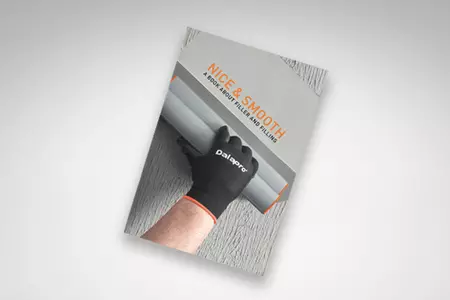
Roller filler for professionals – for the fast and ergonomic application of filler to walls and ceilings
Dalapro roller filler is developed and produced in Sweden by Scanspac. Working closely with professional decorators, we have been developing fillers which meet demanding quality and performance requirements since 1955.
Our roller fillers are optimised for fast and efficient application using a roller, making it easy to cover large surfaces with a smooth, even result. They are convenient to work with and easy to sand, enabling the professional decorator to produce a perfect finish. With a focus on ergonomics, work environment and sustainability, we develop products that make day-to-day jobs easier.
Dalapro’s roller filler is supplied in practical 12-litre buckets, adapted to be easily rolled straight out of the bucket with a filler roller.
Why choose roller filler?
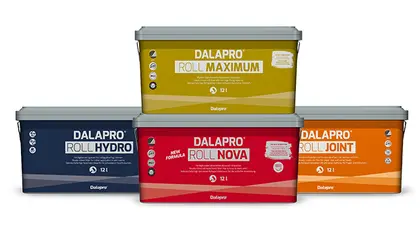
Different kinds of roller filler:

All-round roller filler
Dalapro Roll Nova is a roller filler that is easy to work with and has good filling capacity. Consistent, stable quality.
Suitable for most substrates indoors. For initial filling and fine smoothing, and approved for corner and joint filling; also meets the requirements of CE standard 13963.

Extra low shrinkage roller filler
Dalapro Roll Maximum levels out large uneven areas, minimises the risk of pinholes on non-absorbent substrates and creates a stable, reliable base for further treatment. Produces a fine finish that can be painted directly after sanding.
Suitable for most substrates indoors. For initial filling and fine smoothing. CE-marking 15824.

Adhesive roller filler for plasterboard joints and corner beads
Dalapro Roll Joint creates durable, invisible plasterboard joints and neat, resilient corners. The adhesive properties provide optimal reinforcement for tape and corner beads.
Approved for both corner and joint filling, and meets the requirements of CE standard 13963.

Roller filler for wet rooms
Wet rooms require a filler that can withstand moisture – choose a specially adapted wet room filler. Dalapro Roll Hydro has been developed for bathrooms and other humid environments.
Approved for both corner and joint filling, and meets the requirements of CE standard 13963.
Discover our range of roller fillers:
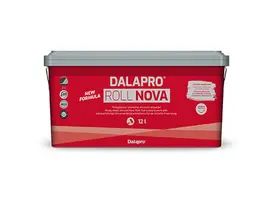
Dalapro Roll Nova
All-round roller filler, easy to work with
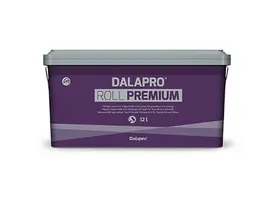
Dalapro Roll Premium
White, all-round roller filler
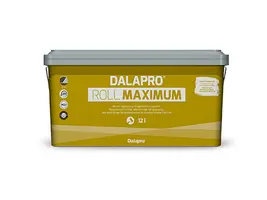
Dalapro Roll Maximum
Roller filler with very high filling capacity
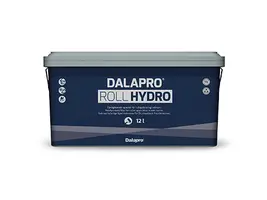
Dalapro Roll Hydro
Roller filler for wet rooms
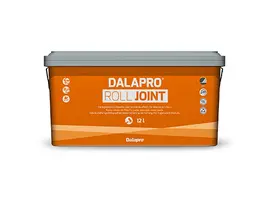
Dalapro Roll Joint
Roller filler for plasterboard joints and corner beads
What is roller filler?
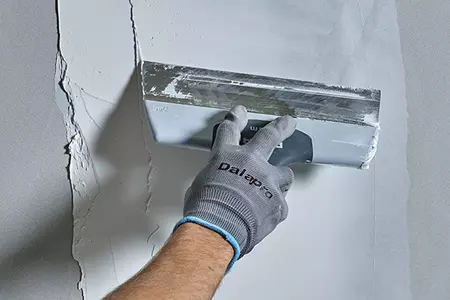
Roller filler is a ready-mixed filler that is applied with a roller for the fast, ergonomic application of filler to walls and ceilings. It is used to level out the surface before painting or wallpapering, and is smoothed after application using a broad putty knife for a consistent, fine end result.
There are different kinds of roller filler. The most common are:
- All-round filler.
- Low shrinkage roller filler.
- Special filler for plasterboard joints, corners, wet rooms, outdoors, woodwork and particularly vulnerable environments such as stairwells and public premises.
When is roller filler used?
Roller filler is used for renovation and new construction, to level out walls and ceilings indoors, for example plasterboard and concrete surfaces. The method was developed so that large surfaces can be covered quickly in a more ergonomic and efficient way than with the traditional use of hand filler.
Filler applied by roller can be used on common substrates such as plasterboard, concrete, plaster, brick, wood, wallpaper and glass fibre fabric.
Always choose the type of roller filler that is adapted to meet the needs of the project.
Roller filler enables work to proceed more quickly and easily, without compromising on the end result – a smart way to achieve smooth, consistent walls and ceilings.
Roller filler from Dalapro – for professionals who demand quality, performance and a perfect end result
Dalapro’s roller filler has been developed in close collaboration with professional decorators in order to meet the high standards demanded by professionals when it comes to function, performance and finish.
Dalapro gives you a filler of high, consistent quality, an ergonomic work method and a result you can be proud of.
Our ready-mixed filler products are manufactured in Sweden in accordance with ISO 9001 and ISO 1400. The products have CE-marking, and many also have the Nordic Ecolabel, M1 and IAC Gold, as well as EPD documentation.
Contact us
Any questions? We’re happy to help. You can find all our different contact channels here.
Here’s a step-by-step guide to applying roller filler

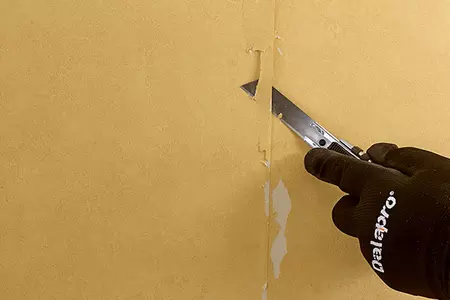
Make sure that the wall or ceiling is clean and dry. Remove dust, loose particles and any old paint that is coming loose.
Cracks and other uneven areas should be filled by hand in advance to create a consistent substrate before you start rolling.
Choose the Speed Max filler roller, specially adapted for roller filler. You can also use an extension pole for the filler roller.
Choose a broader putty knife, the Speed Smoother, to level out and achieve a perfect surface. Available in several sizes and with an extension pole.
Dip the roller in the roller filler and apply evenly to the wall or ceiling.
Apply filler to as large an area as you think you will be able to smooth before the filler has set. The filler becomes a little matt on the surface when the time is just right to start smoothing it. Use protective gloves.
Smooth with a broad putty knife before the surface has dried. If it has dried too much, open up the filler once more using the roller. Smooth it.
Use the filler on the putty knife when smoothing to apply finely in corners and ceiling angles.
Allow the surface to dry before you sand it; it will then be ready for painting or wallpapering.
Drying time, durability and environmental tips when using roller filler
User-friendly, Nordic Ecolabelled filler

Sustainable surface solutions for the buildings of the future
Dalapro combines quality, durability and user-friendliness in all its products. Most products are also Nordic Ecolabelled, giving you a more environment-friendly filler when you are working. Many of the products are also labelled M1 and IAC Gold. To document the environmental performance of our products, we have produced environmental product declarations (EPDs).
Whether you need an all-round filler, joint filler or wet room filler, you can rely on Dalapro to deliver consistent quality every time.

The next generation of filler products
Our filler has been developed with a focus on the decorator. What makes the product stand out is its consistent, high quality – you can rely on every bucket maintaining the same high standard. The filler is smooth to apply and easy to sand, saving both time and effort in the working day.
Suitable tools for roller filler
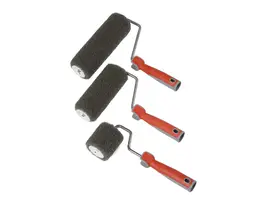
Speed Max Roller
Filler roller
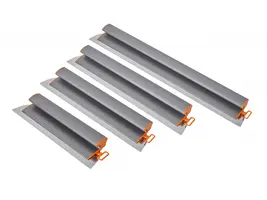
Speed Smoother
Ergonomic broad smoother
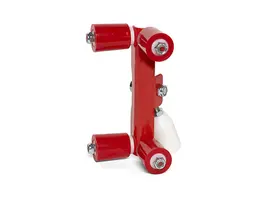
Outside 90 Roller
Corner bead tool for outside corners
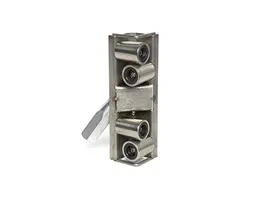
Inside 90 Roller
Corner bead tool for inside corners
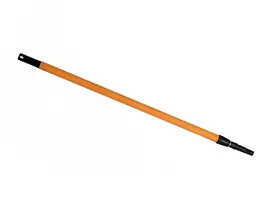
Extension Shaft
Extension Shaft